



Summary: India’s decision to ban Telegram to protect the integrity of its national medical entrance exam (NEET) has sparked widespread debate. While the move seeks to curb paper leaks and networks operating on the encrypted platform, the move also leaves many questions open, especially around systemic issues.
The Ban
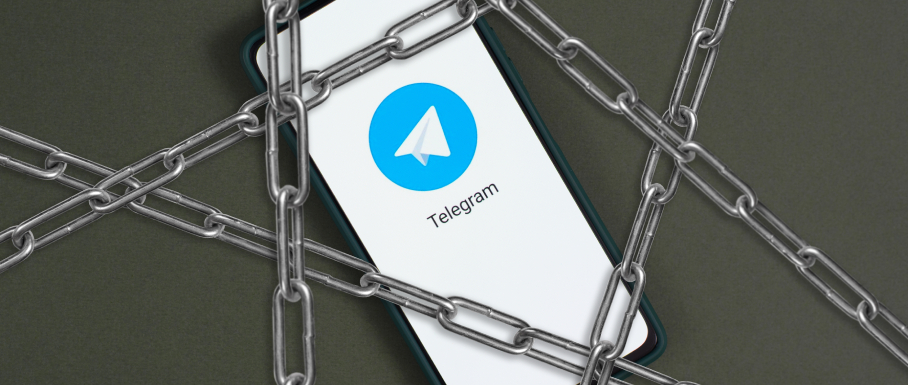
On 16 June 2026, India’s National Testing Agency (‘NTA’) issued a statement endorsing two directions issued by the Government to restrict the operations of the social media and messaging service, Telegram, in the country. The directions included:
(a) blocking access to the service till 22 June 2026, covering the day of the national medical entrance re-examination (‘NEET’) scheduled for 21 June 2026; and
(b) disabling the service’s message-editing feature till 30 June 2026.
NTA said both measures were ‘in the interest of public order’, in response to organised networks that used Telegram to defraud NEET candidates with false promises of leaked question papers. It also pointed to a misuse of the editing feature, where administrators allegedly altered contents of old messages to include question papers after the examination, with the original send-time stamp unchanged, thus creating fabricated “paper leak” evidence.
Meanwhile, Telegram has approached the Delhi High Court challenging the ban, and the matter has been allowed for urgent listing.
Background
The NTA is an autonomous body under the Ministry of Education which conducts entrance examinations and admissions, including NEET. The May 2026 edition of NEET had to be canceled and rescheduled due to paper leaks and related examination irregularities. The leak involved “mock papers” being circulated on messaging services, which were found to perfectly match the actual test papers.
The Indian Cyber Crime Coordination Centre, under the Ministry of Home Affairs, coordinated the take-down of fraudulent Telegram channels, groups and bots, acting on inputs from the NTA, police forces of various States, with support from the Ministry of Electronics and Information Technology (‘MeitY’). A spate of enforcement actions followed, including by the Ahmedabad City Cyber Crime Branch, which arrested an inter-State gang running eight channels, involving transactions of roughly ₹1.5 crore and around 1000 candidates. The NTA claims that after these law enforcement measures failed to fully contain the fraud, it approached the Department of Higher Education and sought MeitY’s intervention, leading to the directions now in force.
The Legal Basis
The restrictions have been issued under Section 69A of the Information Technology Act, 2000 (‘IT Act’), which empowers the Government to direct an intermediary to block access to specific information on its platform, on grounds of (a) sovereignty, (b) defence, (c) security, (d) friendly relations with foreign States, or (e) public order (i.e., the ground invoked here).
A plain reading of Section 69A suggests that it is meant to address grave threats to national interest, and contemplates blocking of identified information hosted on a platform, and not a shutdown of the platform itself.
This raises a threshold question: Does Section 69A permit a blanket, platform-wide ban, rather than targeted/identified content take-down, particularly where the underlying problem is examination fraud (as an outcome of institutional shortcomings) rather than a conventional national-security threat?
The Justification?
The NTA’s intent to protect the sanctity of the NEET exam is not in question, but the proportionality of the response certainly is. A platform used by millions of Indians for legitimate purposes has been rendered inaccessible overnight, because channel-by-channel action proved insufficient to tackle an institutional failure. Note also that, with this ban, bad actors have been forewarned, and the fraud can simply migrate to other messaging services or platforms offering similar features. This will effectively limit the measure’s deterrent value even as it imposes a nationwide inconvenience.
Besides proportionality, this measure leaves open several other questions: Does Section 69A permit a blanket platform ban rather than targeted/identified content removal? Is the measure consistent with the intermediary liability regime under Indian laws? Does this impact India’s image as a stable and predictable market for global digital businesses? These are questions that policymakers and other stakeholders would do well to ponder over in the coming months, while assessing India’s place on the world stage.














 English
 Chinese (Simplified)
 Japanese